
Designs · New Pool Center
Swimming Pool Designs: Start with how you want to use the water.
Use these swimming pool designs to turn “I want a pool” into a practical brief for swimming, relaxing, entertaining, playing, or a mix—then fit that experience to the yard and budget.
Start with use and priorities. Shape and features become easier to compare after that.
The direct answer
The right pool design supports the activities you value, the people who will use it, and the way the yard needs to work.
The best swimming pool designs begin with use: laps, games, low-impact exercise, lounging, entertaining, quiet relaxation, or family time. Then decide how much space each activity needs, how people enter and move around the pool, which features matter, and what the property can support. A builder or designer must confirm dimensions, structure, drainage, utilities, safety, and local requirements.
What happens in the water?
Define the two or three activities the pool should serve best.
Who needs to feel comfortable?
Consider swimmers, children, older adults, guests, pets, and supervision.
What happens around the water?
Plan circulation, seating, shade, dining, storage, and equipment access.
What should the pool connect to?
Use views, sunlight, privacy, architecture, landscaping, and indoor access.
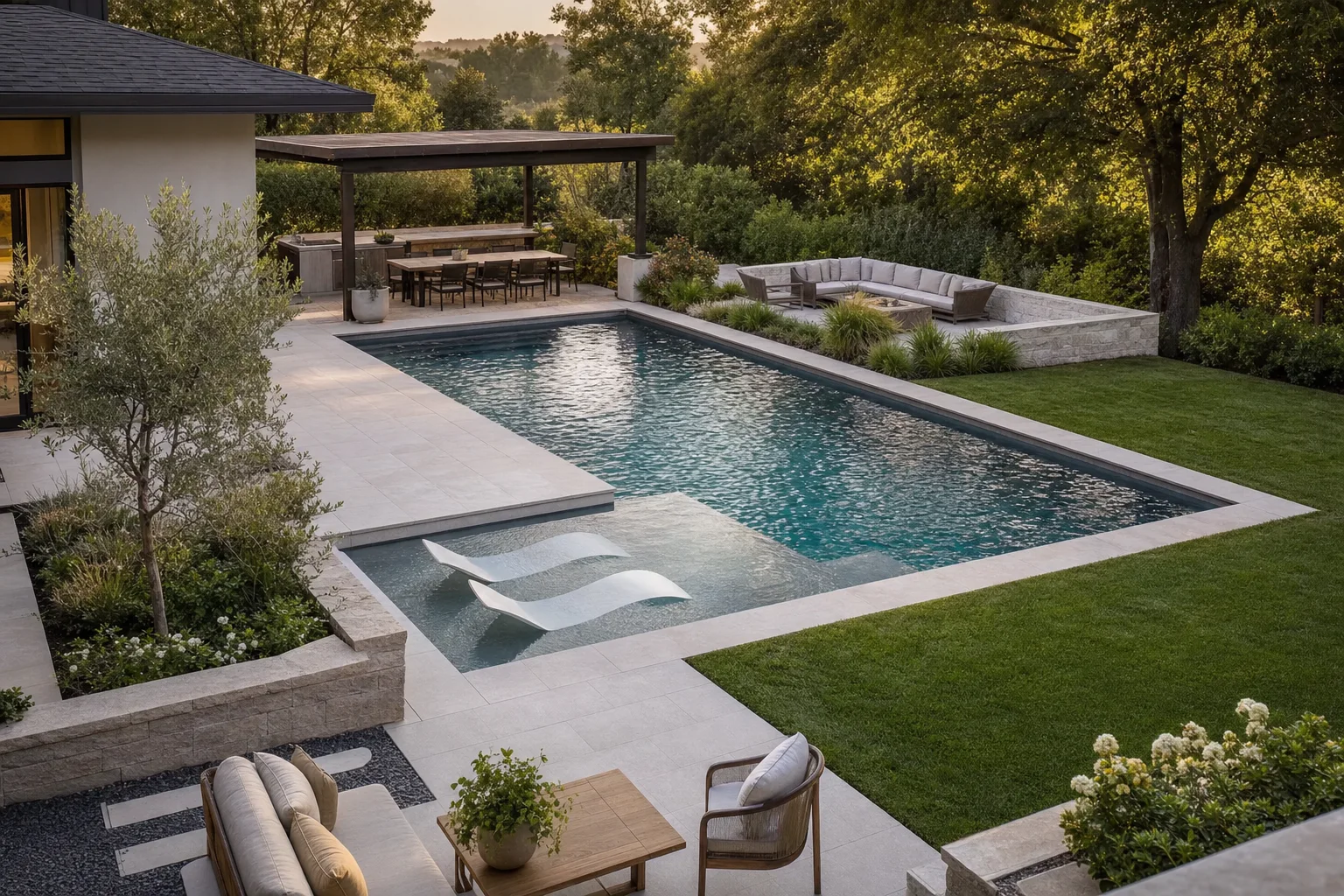
Design from purpose
Four useful starting directions
Swimming pool designs can blend these ideas. The goal is to make priorities visible before selecting finishes.
Swim + exercise
Prioritize a clear swim path, useful length, safe entry, consistent depth where appropriate, and room to turn.
Gather + entertain
Connect conversation areas, shallow lounging, seating, shade, lighting, food service, and clear movement around guests.
Play + family time
Plan sight lines, entries, age-appropriate zones, storage, barriers, and surfaces with real supervision in mind.
Relax + retreat
Use privacy, quiet equipment placement, comfortable entry, warming options, water sound, landscaping, and a focused view.
Turn ideas into decisions
Every design choice has a job and a tradeoff.
For swimming pool designs, ask what each feature improves, what space or systems it needs, and how it changes the complete project.
Your first design brief
Use these answers to compare swimming pool designs.
- Top two uses for the pool and surrounding space
- People, ages, abilities, guests, and supervision needs
- Must-have features and features that can wait
- Preferred views, privacy, sunlight, shade, and house connection
- Space for walking, seating, storage, equipment, and service access
- Complete-project budget and priorities if tradeoffs are needed
Continue your plan
Connect swimming pool designs to structure, property, and price.
Quick answers
Pool design questions
Should I choose a pool shape before speaking with a builder?
You can save examples, but first describe how you want to use the pool, the people it should serve, and your priorities. The final shape must also fit the property, pool type, engineering, budget, and local requirements.
How many features should I put in the first design?
Separate must-haves from nice-to-haves. Ask what each feature adds to use, space, utilities, maintenance, and cost. This makes it easier to simplify the design without losing its purpose.
Can any design work with any pool type?
No. Construction methods, available molds or components, transportation, engineering, property access, and installer capabilities can limit dimensions, shapes, depths, and features. Compare pool types after your priorities are clear.