
Pool Types · New Pool Center
Types of Swimming Pools: Which one fits your project?
Use this guide to compare types of swimming pools by how each option is built, where it can fit, what installation involves, and what ownership may require.
There is no universal best type. The right choice depends on your priorities, property, local options, and complete budget.
The direct answer
Choose a pool type by matching its construction method and limits to the experience, property, timeline, and ownership plan you want.
The main types of swimming pools include fiberglass, concrete, and vinyl-liner in-ground choices, plus above-ground, container, plunge-pool, and spa options for different space, use, installation, or budget goals. Availability, terminology, warranties, site requirements, and performance vary by product and installer, so confirm claims in writing for the exact option being proposed.
Fiberglass
A manufactured shell delivered to the property and set into a prepared excavation.
- Known shell shape and finish
- Transport and access matter
- Options depend on available models
Concrete / gunite
A site-built structure formed and finished for the specific project.
- Broad design flexibility
- More site construction steps
- Finish and upkeep need review
Vinyl liner
A framed pool structure with a fitted interior liner.
- Multiple shape and kit options
- Liner care matters
- Future liner replacement is part of ownership
Above-ground
A pool supported above grade, often paired with a separate deck or access system.
- Different excavation needs
- Deck and barrier scope can be significant
- Local rules still require confirmation
Container / plunge
A compact format that may use a fabricated vessel, modular system, or site-built small pool.
- Useful where space is a priority
- Delivery, support, access, and engineering matter
- “Compact” does not mean no site work
Spa / hot tub
A warm-water option for soaking, hydrotherapy, or a smaller gathering space.
- Portable and built-in options differ
- Base, power, access, cover, and drainage matter
- Use and operating expectations should be clear
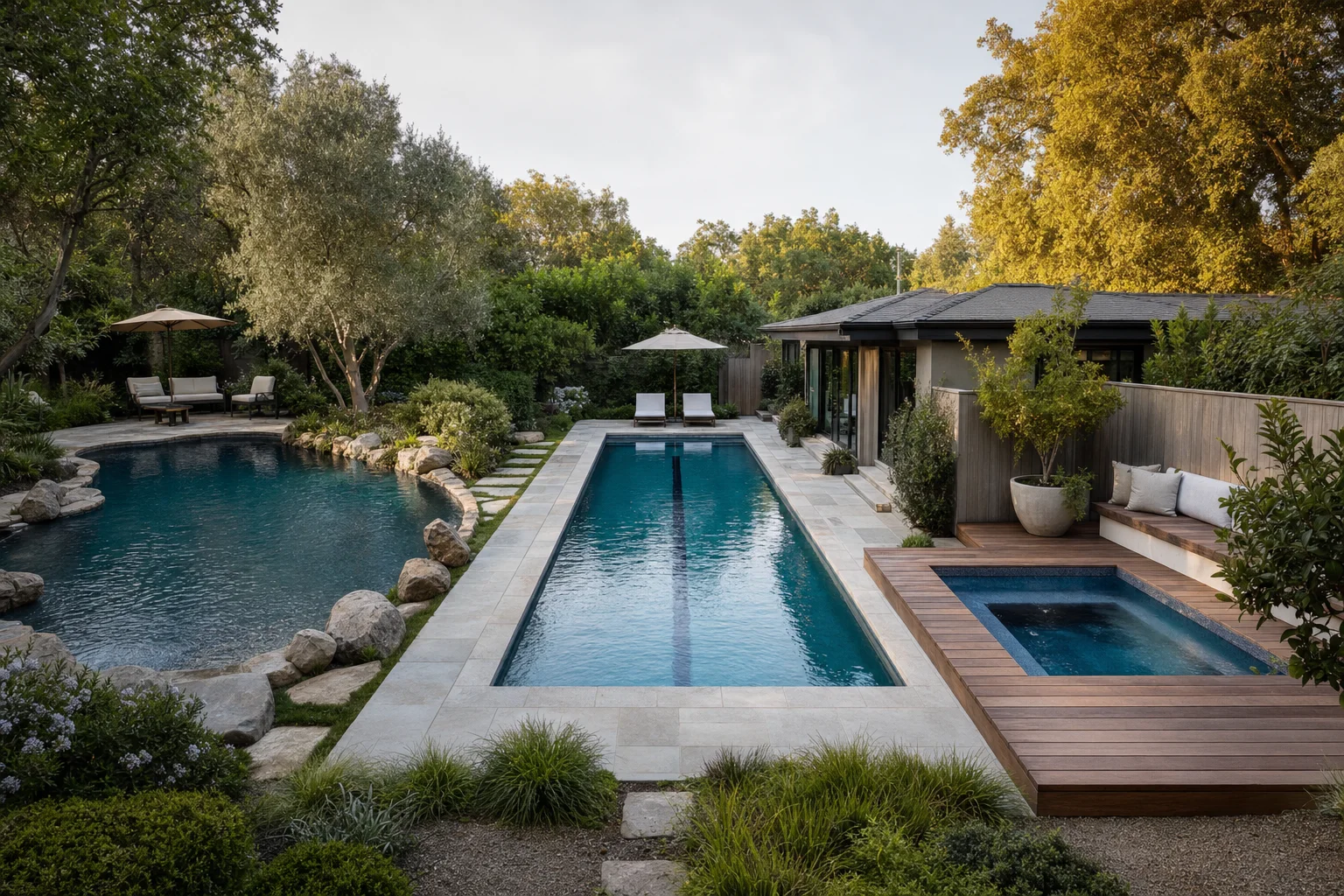
Side-by-side thinking
Compare the questions that change the choice.
Use these questions to compare types of swimming pools as planning tendencies, not guarantees. Confirm the exact product, design, installer scope, warranty, and property requirements.
A better decision filter
Rank the factors that matter when comparing types of swimming pools.
- Useswim, play, relax, gather
- Designshape, depth, features, finish
- Propertyspace, access, grade, utilities
- Timingapprovals, delivery, construction sequence
- Ownershipsurface care, equipment, future replacement
- Budgetcomplete project, not shell alone
Ask before choosing
Use the same questions to compare types of swimming pools.
- Which dimensions, depths, finishes, steps, and features are available?
- What equipment and utilities does the proposed system need?
- How will it reach and fit the property?
- What property preparation and surrounding work are excluded?
- What routine care and future surface or component replacement should I plan for?
- Who provides the product, installation, startup, service, and written warranties?
Quick answers
Pool type questions
Is fiberglass, concrete, or vinyl liner always the least expensive?
No single type is always least expensive. Size, design, product, property work, access, equipment, decking, local labor, allowances, and included scope can change the complete project cost.
Which pool type is fastest to install?
Installation sequence varies. A manufactured shell may reduce some on-site construction, but access, excavation, utilities, decking, approvals, weather, scheduling, and surrounding work still affect completion. Ask for the exact proposed sequence.
Can I decide on a pool type before a site review?
You can identify preferences, but a property-specific review should confirm access, space, grade, drainage, utilities, soil or groundwater concerns, local requirements, and whether the selected system can be installed as planned.